
Press
For podcast producers, journalists, and event organisers.
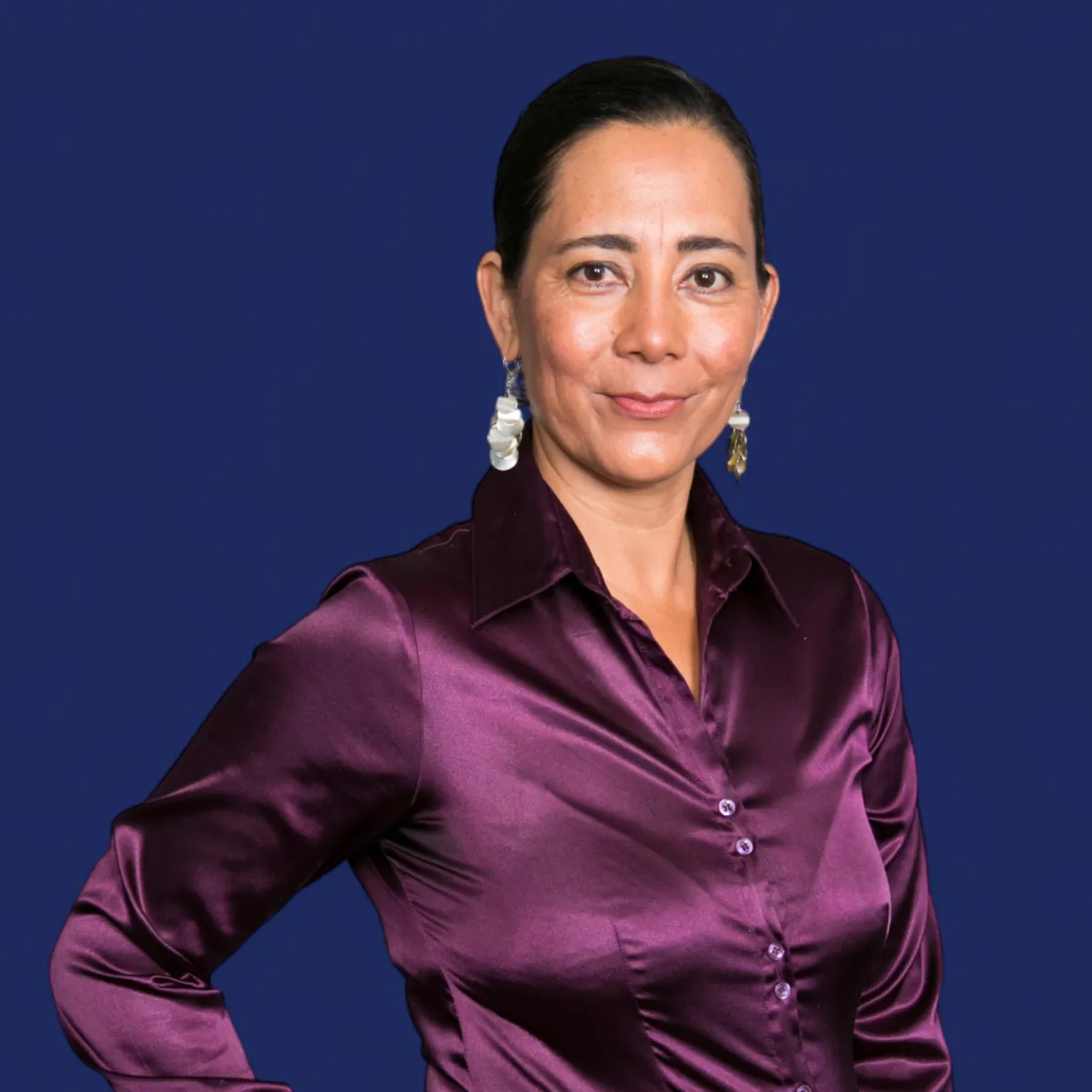
About Amelia
Twenty-five years asking the questions your doctor doesn't have time for.
Acupuncturist, herbalist, and endocrinology specialist with 25 years of clinical practice — now teaching women online what medicine hasn't told them.
Amelia works at the intersection of Traditional Chinese Medicine, hormonal endocrinology, and Western diagnostics. Her approach is precise, data-driven, and deeply rooted in the body's own signals — the kind of fertility medicine that takes an hour to explain and a career to master.
She is available for podcast interviews, expert commentary, and keynote presentations on women's hormonal health, fertility literacy, and the gaps in conventional reproductive medicine.
Press Talking Points
Topics Amelia speaks on with depth, clarity, and clinical authority.
The literacy gap in women's fertility
Most women enter fertility treatment knowing less about their own cycle than their grandmother did. This isn't a personal failing — it's the direct consequence of a medical system that replaced body literacy with the pill. Amelia explains what was lost, and what it takes to get it back.
Why standard fertility testing misses so much
The standard Day 3 bloods and AMH test tell you almost nothing about why you're not conceiving. Amelia breaks down what the tests actually measure, what they don't, and which markers most reproductive endocrinologists never order.
What Traditional Chinese Medicine actually gets right
Not crystals and incense. TCM has a 2,000-year clinical record of reading hormonal and metabolic patterns through the body's observable signals. Amelia explains what's evidence-based, what's folk medicine, and why the distinction matters for fertility.
The role of the nervous system in conception
Chronic stress doesn't just make you feel terrible — it directly suppresses ovulation, disrupts implantation, and alters cervical mucus production. Amelia explains the physiology clearly, without the "just relax" dismissiveness that drives her patients mad.
Reading the menstrual cycle as a diagnostic tool
Cycle length, blood quality, mid-cycle pain, and cervical fluid patterns are a running commentary on hormonal health. Amelia teaches women — and their practitioners — how to read them.
When to pursue IVF and when to wait
IVF is not a last resort and it's not a first resort. Amelia shares her clinical framework for deciding whether to pursue assisted reproduction, prepare the body for it, or step back and address root causes first.
Men's fertility and the conversation nobody's having
Male factor accounts for roughly half of all fertility challenges — yet the conversation is almost entirely focused on women. Amelia speaks on what men need to know, why they're not being told, and how couples can approach this together.
The emotional architecture of the fertility journey
The grief, the identity disruption, the relationship strain, the medical system's clinical indifference. Amelia doesn't therapise — she contextualises. This is what the journey actually looks like, from someone who has sat with thousands of women through it.
Sample Interview Questions
These questions are ready to use. Feel free to adapt them for your format and audience.
1. You've spent 25 years in clinical practice. What do you see in the room that isn't showing up in the research yet?
2. What are the most common hormonal imbalances you see in women who are struggling to conceive — and why are they so frequently missed?
3. When a woman walks into your clinic, what are the first things you're looking for that a conventional fertility specialist wouldn't think to assess?
4. You work across Traditional Chinese Medicine, endocrinology, and Western diagnostics. How do those three frameworks talk to each other in practice?
5. What does the menstrual cycle tell you that a blood test can't?
6. Where do you see women wasting time and money in the fertility space — and what should they be doing instead?
7. You talk about a "literacy gap" in women's understanding of their own bodies. Where did that gap come from, and what does it cost them?
8. What's your take on the role of stress and the nervous system in fertility — and how do you talk about it without sounding like you're telling women to just relax?
9. When do you recommend a woman pursue IVF, and when do you think she should wait?
10. Male factor fertility is underdiagnosed and underdiscussed. What do you want couples to know?
11. What does a woman need to focus on in the 90 days before she starts trying — or before an IVF cycle?
12. What's the mindset shift you see make the biggest difference for the women who go on to conceive?
Press Photos
High-resolution images available for editorial and promotional use.

Headshot 01 — Formal
Download high-res →
Headshot 02 — Editorial
Download high-res →
Headshot 03 — Candid
Download high-res →
Book Amelia for your podcast or event.
Available for podcast interviews, keynote presentations, and expert panels on women's hormonal health, fertility literacy, and Traditional Chinese Medicine.
Get my weekly newsletter
The fertility education your doctor never gave you, delivered every Friday. No fluff, no spam.


Your body has answers. Let's find them.
© 2026 Womb Coach. All rights reserved.